
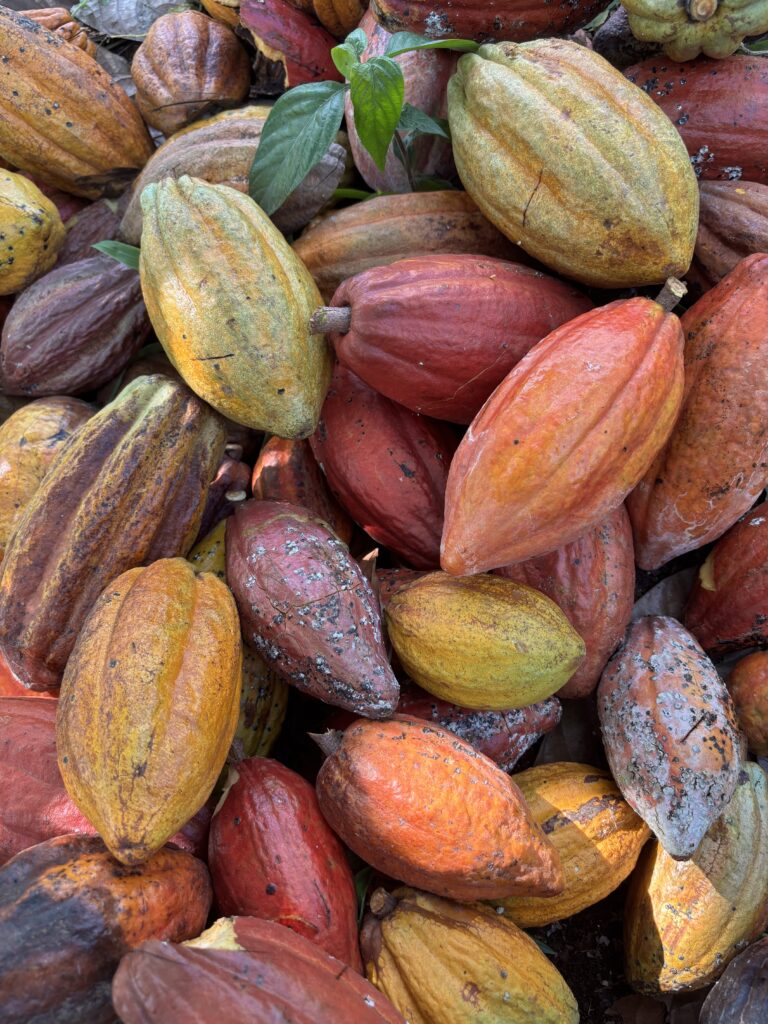
LOMBOK – Most people know cacao only in its final form: a chocolate bar, a warm drink, or a tin of cocoa powder in the kitchen. Yet the story of chocolate flavor begins long before that, with the cacao pod hanging from the trunk of its tree. And cacao pods are not simply brown, as many imagine. At VANCACAO, I found pods in a surprising range of colors, from green, yellow, and orange to red and deep purple. That sparked a question: do different colors also mean different flavors?
Why Are Cacao Pods So Colorful?
The color of a cacao pod’s skin is determined mainly by its variety, and it changes as the pod ripens. Broadly, cacao pods follow one of two color patterns:
- Green when young, yellow when ripe. This pattern is common in Forastero cacao, the most widely grown type in the world, including in Indonesia.
- Red or purple when young, orange when ripe. This pattern is often seen in Criollo cacao and some Trinitario (a cross between Criollo and Forastero).
So as I walked among the cacao trees at VANCACAO, the different pod colors were telling me two things at once: which family each pod came from, and how ready it was to be harvested.
Opening the Pods, Tasting What’s Inside
The most exciting part came when the pods were split open. Inside, the cacao beans sit in neat rows, wrapped in a soft, slippery white pulp. The pulp was the first thing I tasted, and this is where the differences between pods started to show.
Yellow pods (from pods that started out green). The pulp is sweet with a fresh tartness, a little reminiscent of mangosteen or lychee. When cut open, the beans tend to be deep purple. A small taste of the raw bean brings a strong bitterness and astringency to the tongue. After fermentation and roasting, this character usually produces a bold, full-bodied, classic chocolate flavor.
Red and orange pods. The pulp is more fragrant, with a gentler acidity. The beans tend to be paler, from light purple to almost white. Their bitterness and astringency are much milder than the yellow pods’, with a soft, slightly nutty impression. Cacao with this character is often associated with “fine flavor” chocolate, known for its more complex aroma.
Deep purple pods. These were the most eye-catching. The pulp tends to be more sour and refreshing, with a noticeable fruity aroma. The beans fall somewhere in between: less bitter than the yellow pods, but more assertive than the red and orange ones.
Color Is Not the Only Thing That Shapes Flavor
After tasting the pods one by one, I realized that skin color can be an early clue, but it is not the only factor. What matters more for flavor is:
- Variety and plant genetics, which determine bean color and the levels of bitter and astringent compounds.
- Ripeness at harvest, because pods picked too early or too late give a less balanced flavor.
- Bean color inside the pod. Paler beans are generally milder, while deep purple beans tend to be more bitter and intense.
- Post-harvest processing, especially fermentation, drying, and roasting. These are the steps that turn bitter raw cacao beans into fragrant raw material for chocolate.
In other words, pod color is a doorway into understanding cacao’s character, while the final flavor is shaped by the long journey from farm to chocolate maker.
An Experience That Changes How You Enjoy Chocolate
Visiting VANCACAO and tasting cacao pods of different colors firsthand changed the way I look at chocolate. Every chocolate bar carries a story: what kind of pod was picked, which type of tree it came from, and how it was processed. Colors that at first seemed merely pretty turned out to hold a fascinating range of flavors waiting to be explored.
For anyone curious about where chocolate comes from, seeing and tasting colorful cacao pods at a place like VANCACAO is an experience worth having. Who knows, you might discover your own favorite cacao color.